📄 Digital book in PDF · read it on your phone or print it
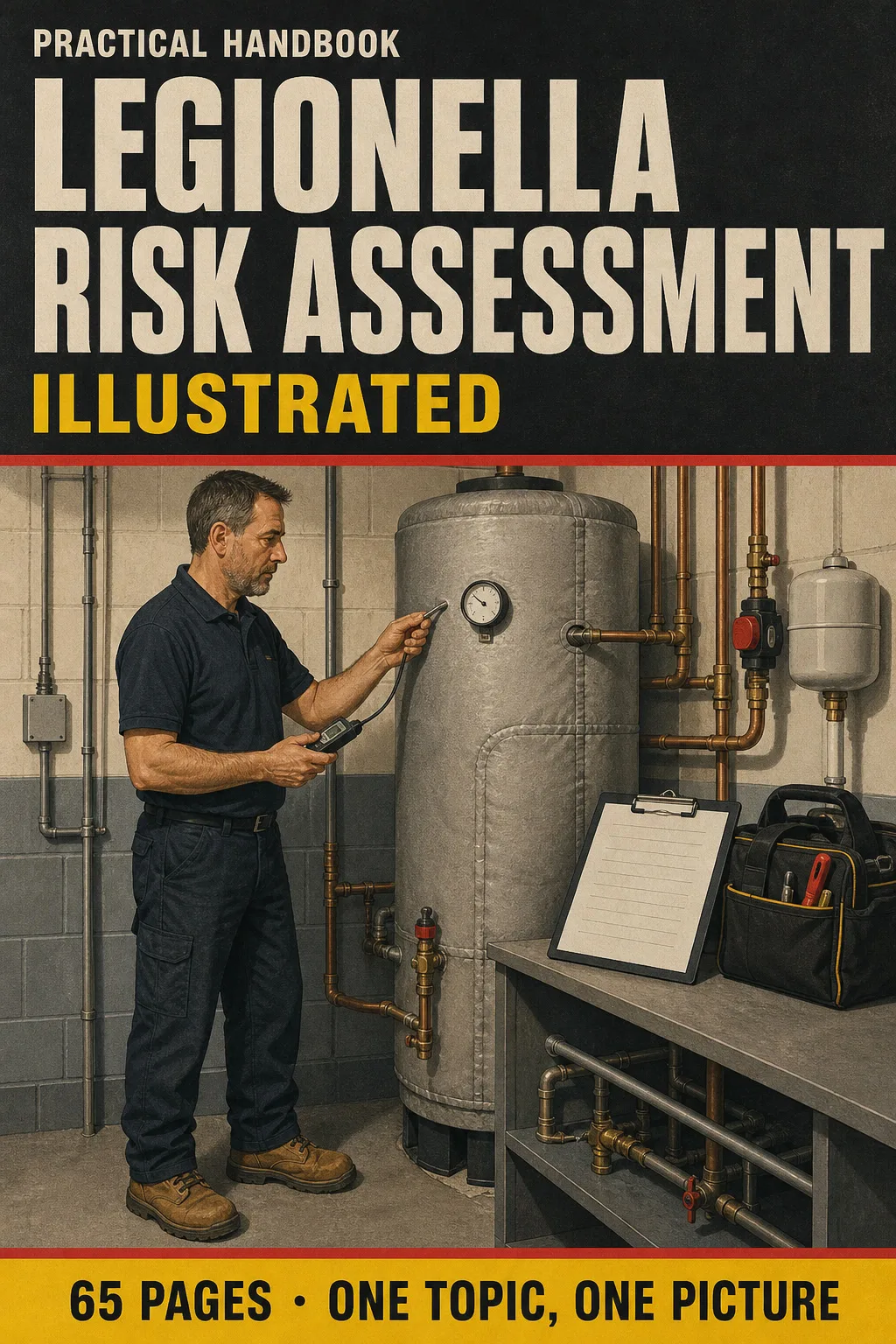
For UK landlords, caretakers and plumbers. Your system labelled from the loft tank to the cylinder, temperatures in °C, dead legs and flushing, and the risk assessment in 4 steps. One topic per page: the drawing first, then what to remember. 65 illustrated pages.
🔒 Secure checkout · PDF by email · 30-day guarantee
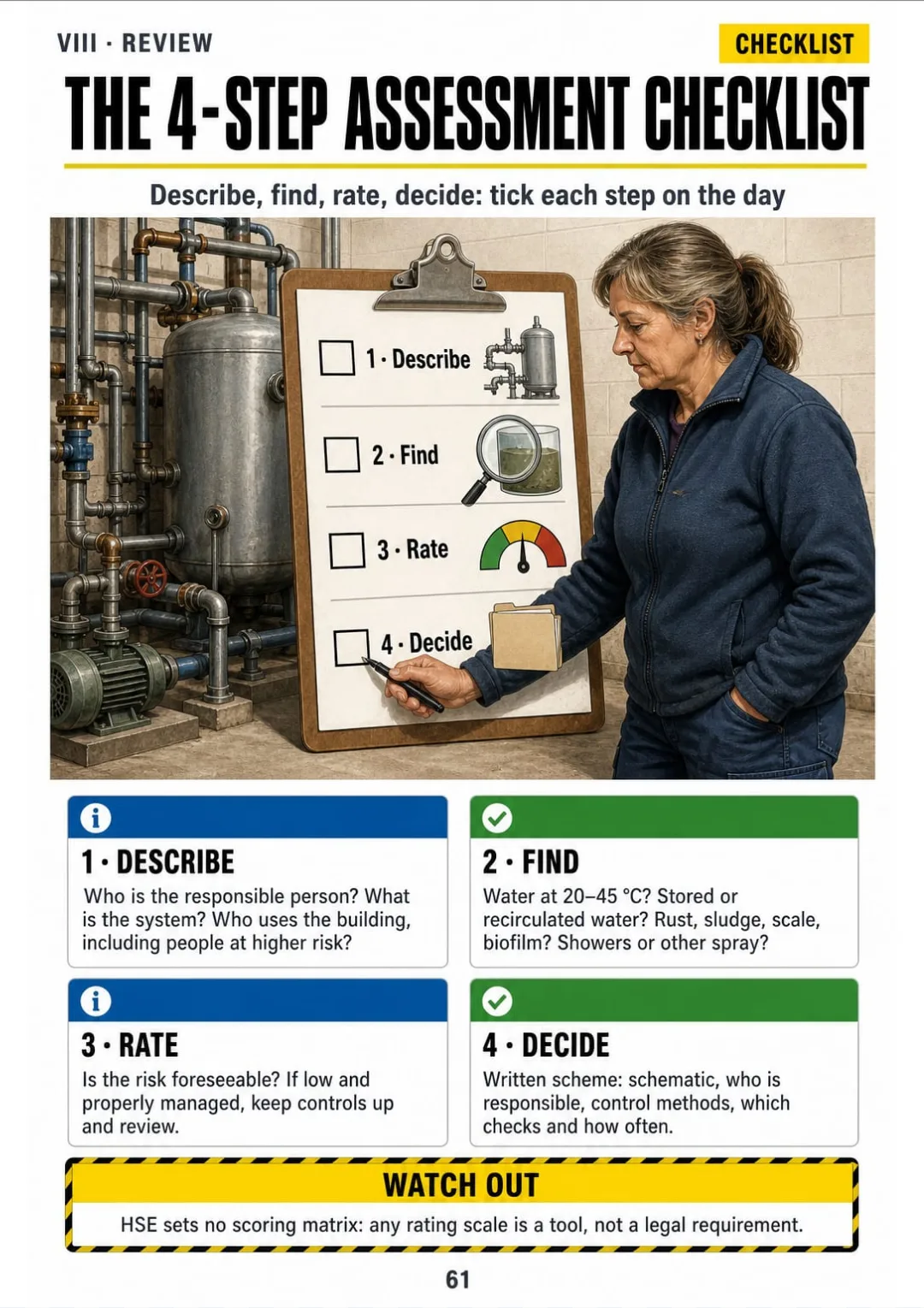
Every page has one big drawing and a box with the temperatures, intervals and steps you need to know:


Swipe to see more →
These are real pages from the book. The table of contents is the full one: 8 parts and 61 topics.
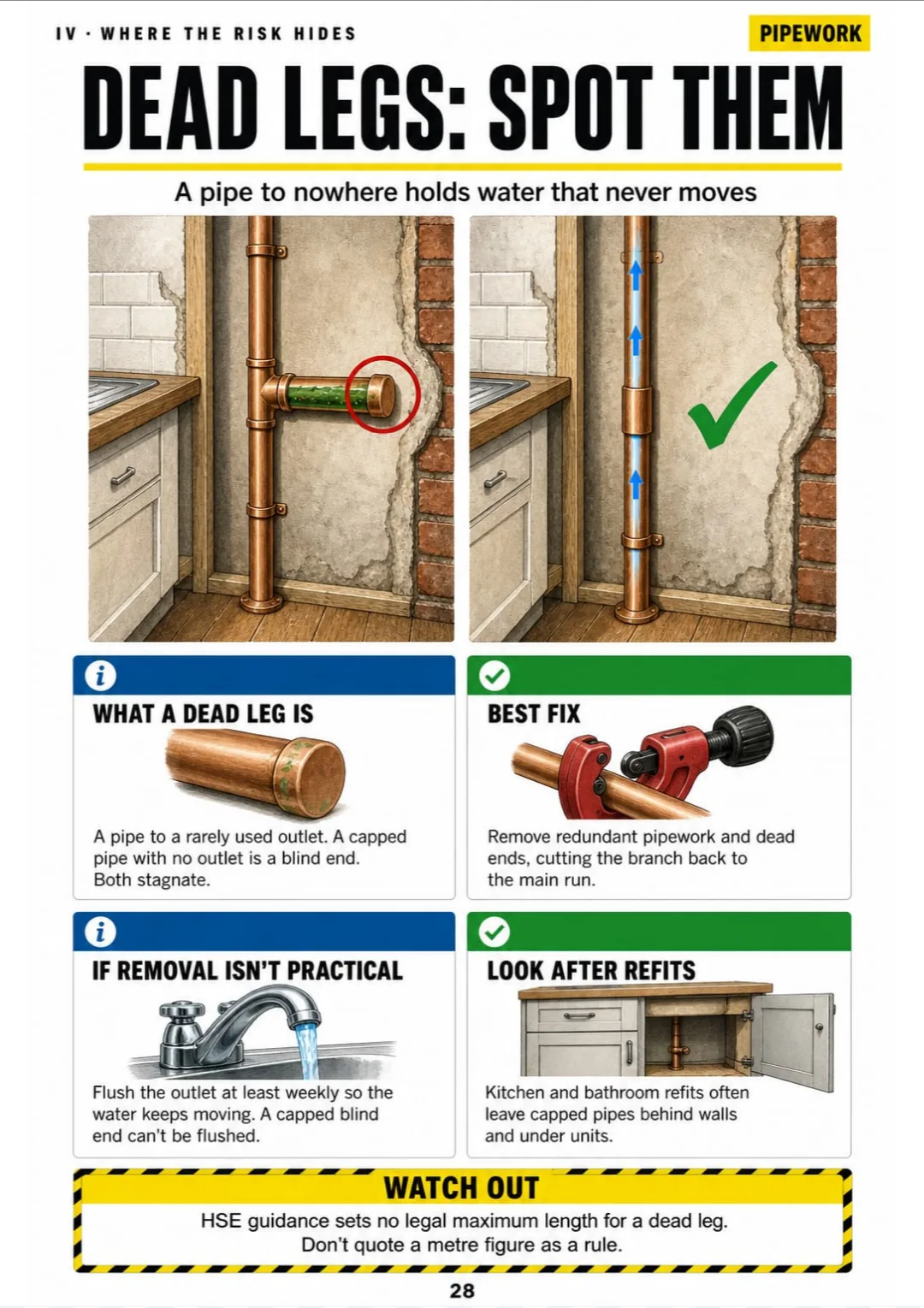
You're in the airing cupboard, looking at a pipe that once fed a washing machine and now stops behind a cap. Is that a dead leg, and what are you meant to do about it?
The guidance covers it in paragraphs: lengths, stagnant water, outlets used infrequently. Not one line shows you a pipe like yours, so you keep reading and still can't tell.

In the book, the dead leg is a drawing: the main run, the branch that goes nowhere, the still water coloured in. Beside it, two options: cut it back to the main run, or flush the outlet weekly.
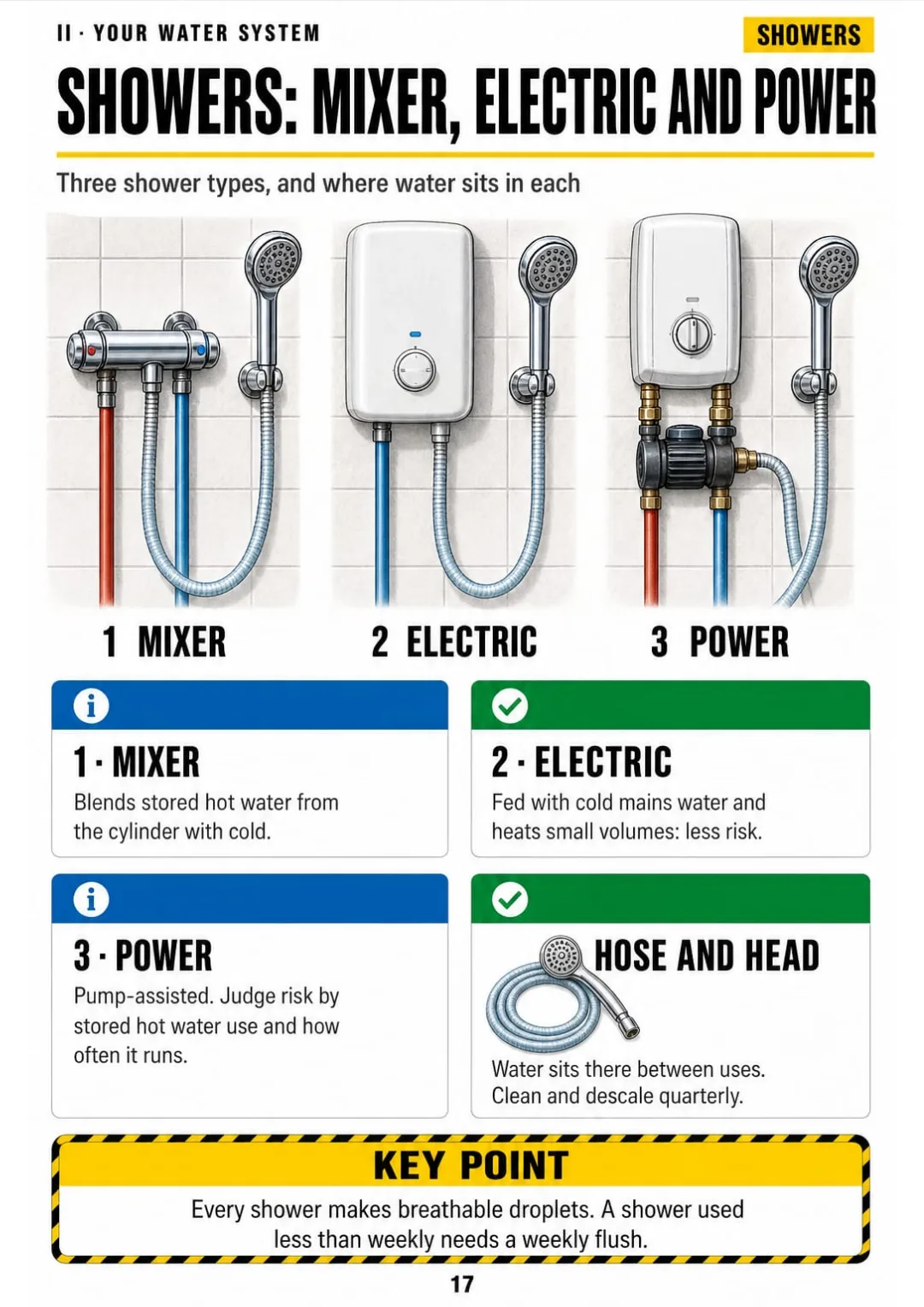
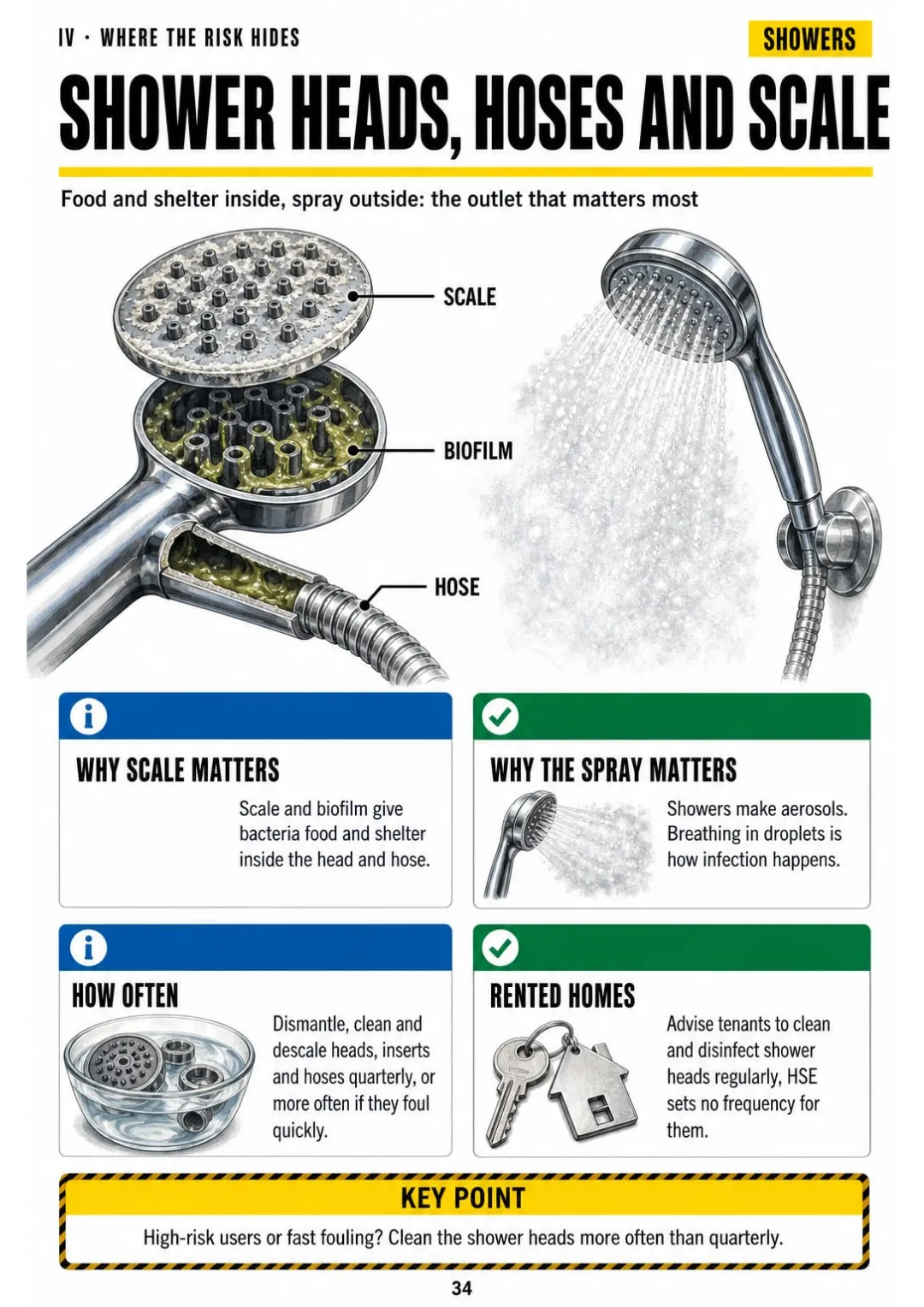
The loft tank, the cylinder, sentinel taps, shower heads and the failed reading work the same way: each one has its own page.
You look at the pipe, recognise it from the drawing and know what to do. No going back to the guidance to check.

Why it matters, your water system drawn and labelled, temperatures in °C, where the risk hides, the 4-step risk assessment, the control scheme and routine tasks, records and responsibilities, and the review checklists: 65 pages, all illustrated
Think of it this way:
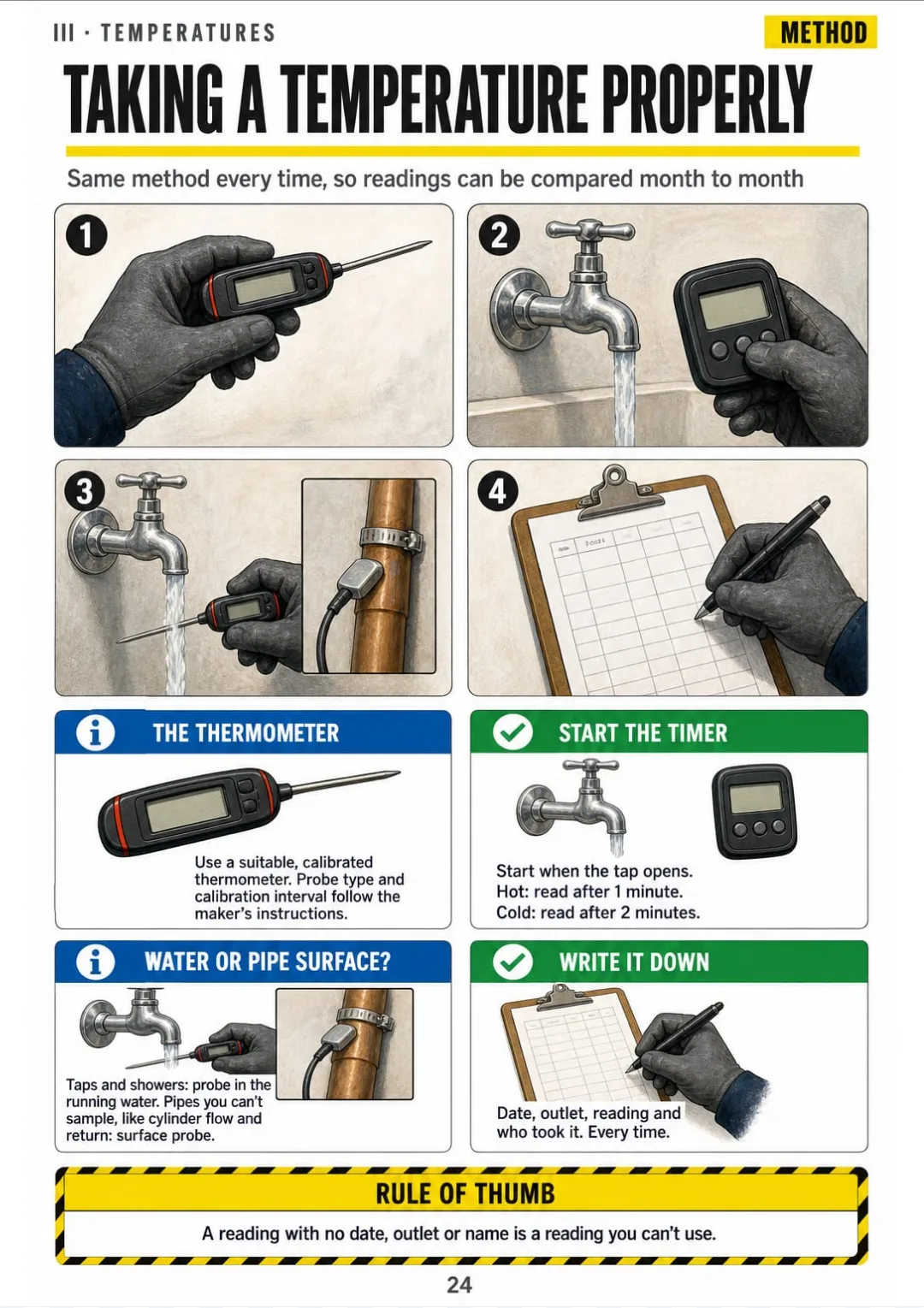
It's the monthly check. You're at the tap furthest from the cylinder, probe in hand, and you need to know how long to run it and which number counts as a pass.
You open the page on taking a temperature and it's drawn: the calibrated probe in the flow, hot at 50 °C or more within one minute, cold below 20 °C within two, and the line in the log where the reading goes.

The loft tank, dead legs, flushing a little-used outlet, shower heads and the 4-step assessment are the same: each one on its own page.
Legionella Risk Assessment Illustrated is 8 parts and 61 topics, all drawn, with checklists, frequent mistakes and every number on one page at the end.
What you see drawn, you don't have to memorize.
What Legionella is, Legionnaires' disease and Pontiac fever, who is most at risk, the 4 conditions bacteria need, where the spray comes from and who is responsible.
The whole system on one page, the mains, the loft tank, the cylinder, combis, the feed and expansion tank, showers, TMVs and what changes in bigger buildings.
The temperature scale, 60 °C stored, 50 °C at the tap, cold below 20 °C, how to take a reading, sentinel outlets, the tank check and scald risk.
Dead legs, blind ends, little-used outlets, tanks without a proper lid, sludge, oversized storage, warm cold pipes, shower heads and extras like hot tubs.
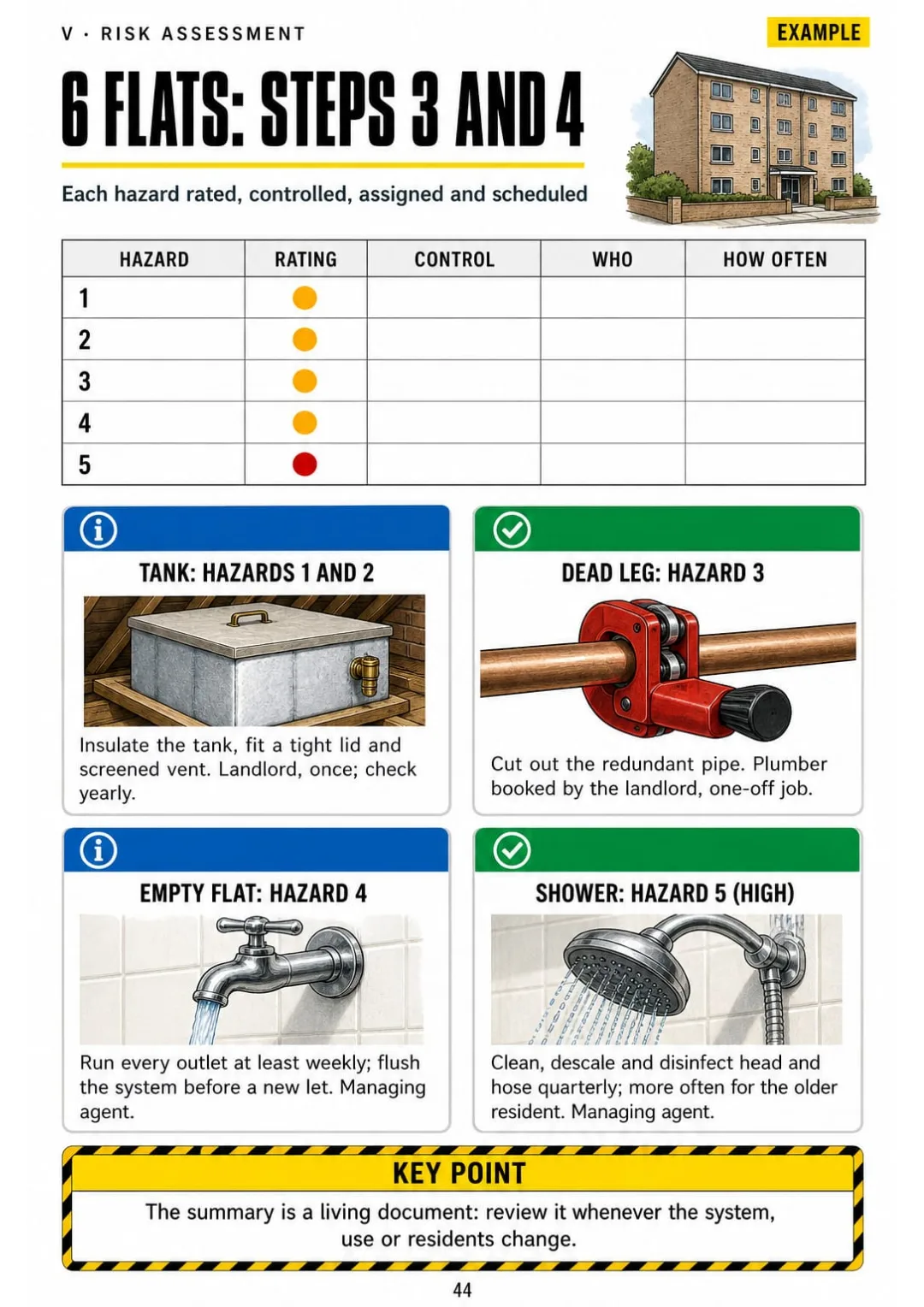
The 4 steps in order: describe the system, find the hazards, rate the risk, decide the controls, with a worked example for a block of 6 flats.
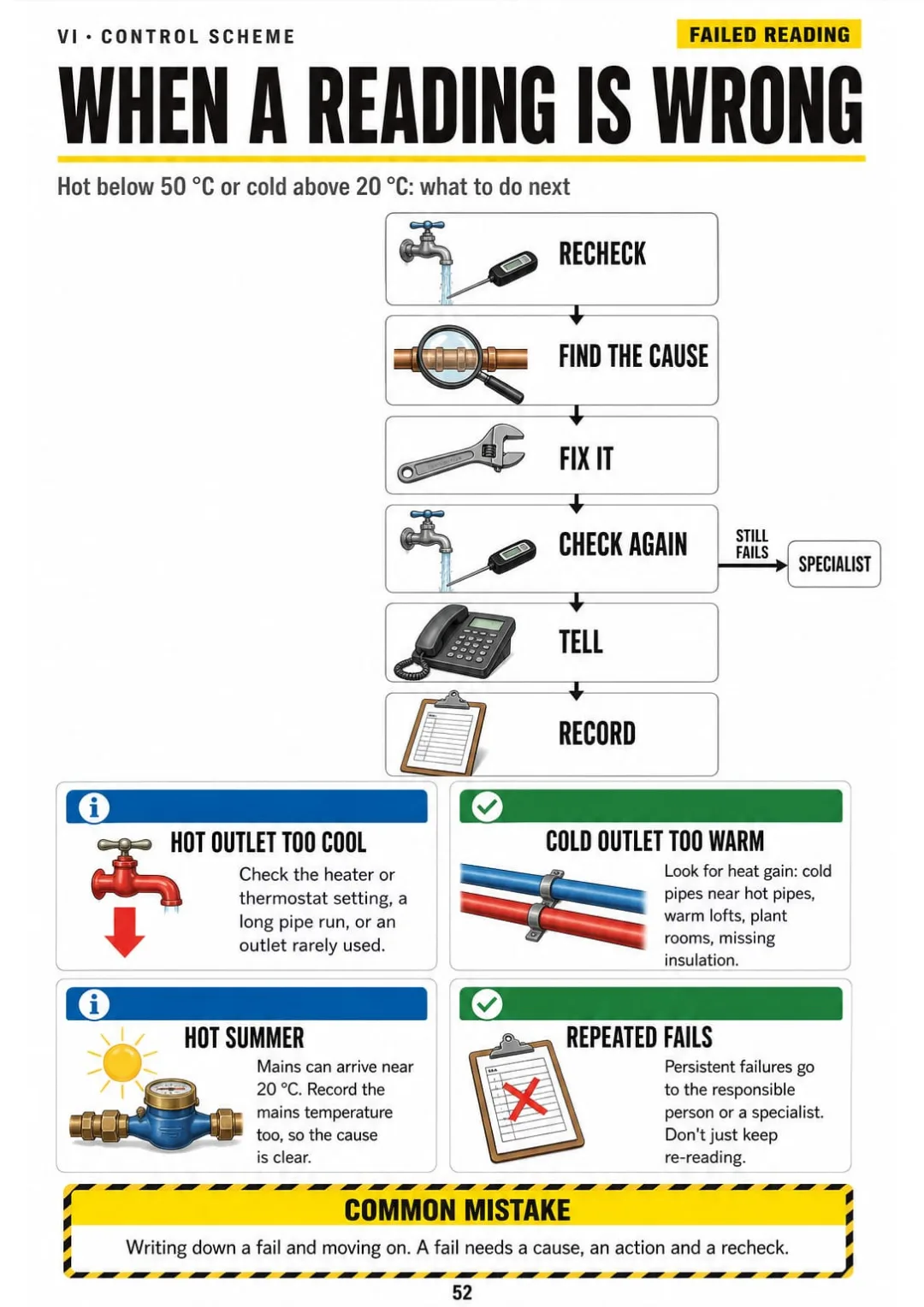
The written scheme, flushing step by step, monthly sentinel checks, descaling shower heads, tank and cylinder checks, void periods, failed readings and when to call a specialist.
Which records to keep, filling in a temperature log and a flushing record, reviewing the assessment, landlords and tenants, and what being competent means.
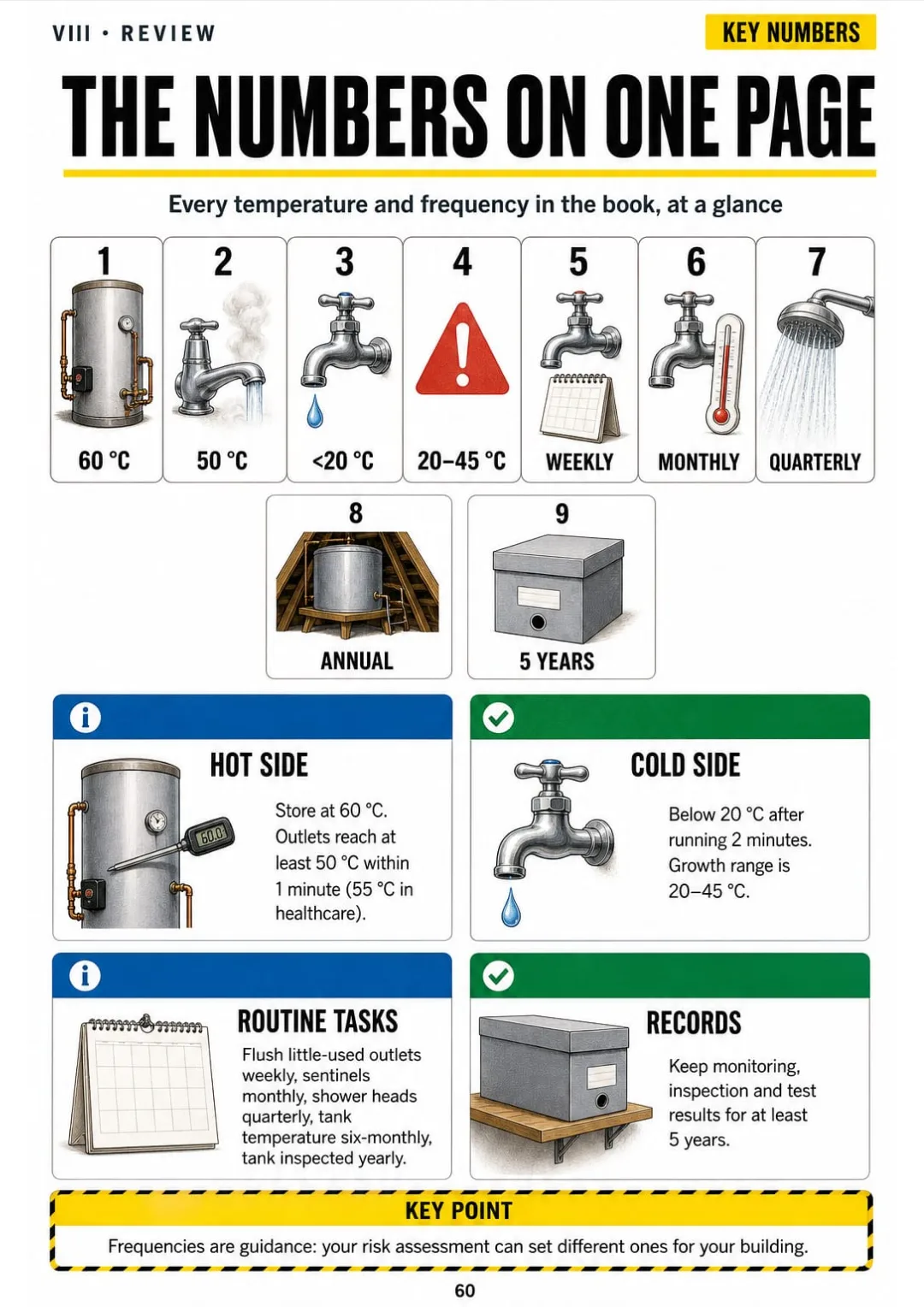
Every number on one page, the 4-step checklist, the loft and tank checklist, frequent mistakes with temperatures and paperwork, and a page for your own system.
At the end of the book: A worked assessment for 6 flats, review checklists, frequent mistakes and every number on one page.
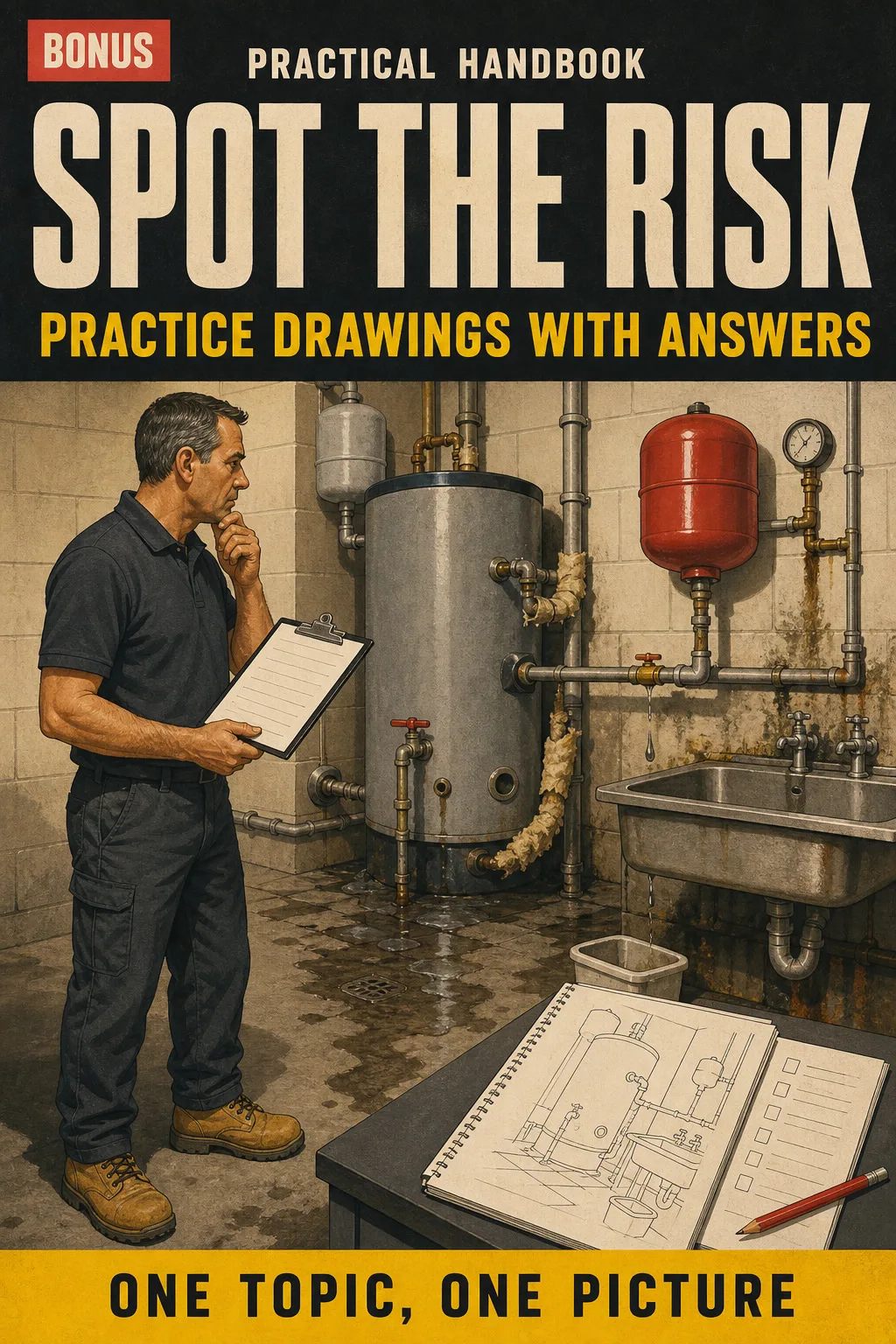
Practise on drawn water systems you have never seen: find the dead legs, the warm cold-water pipe and the forgotten outlet, then check your answers page by page.

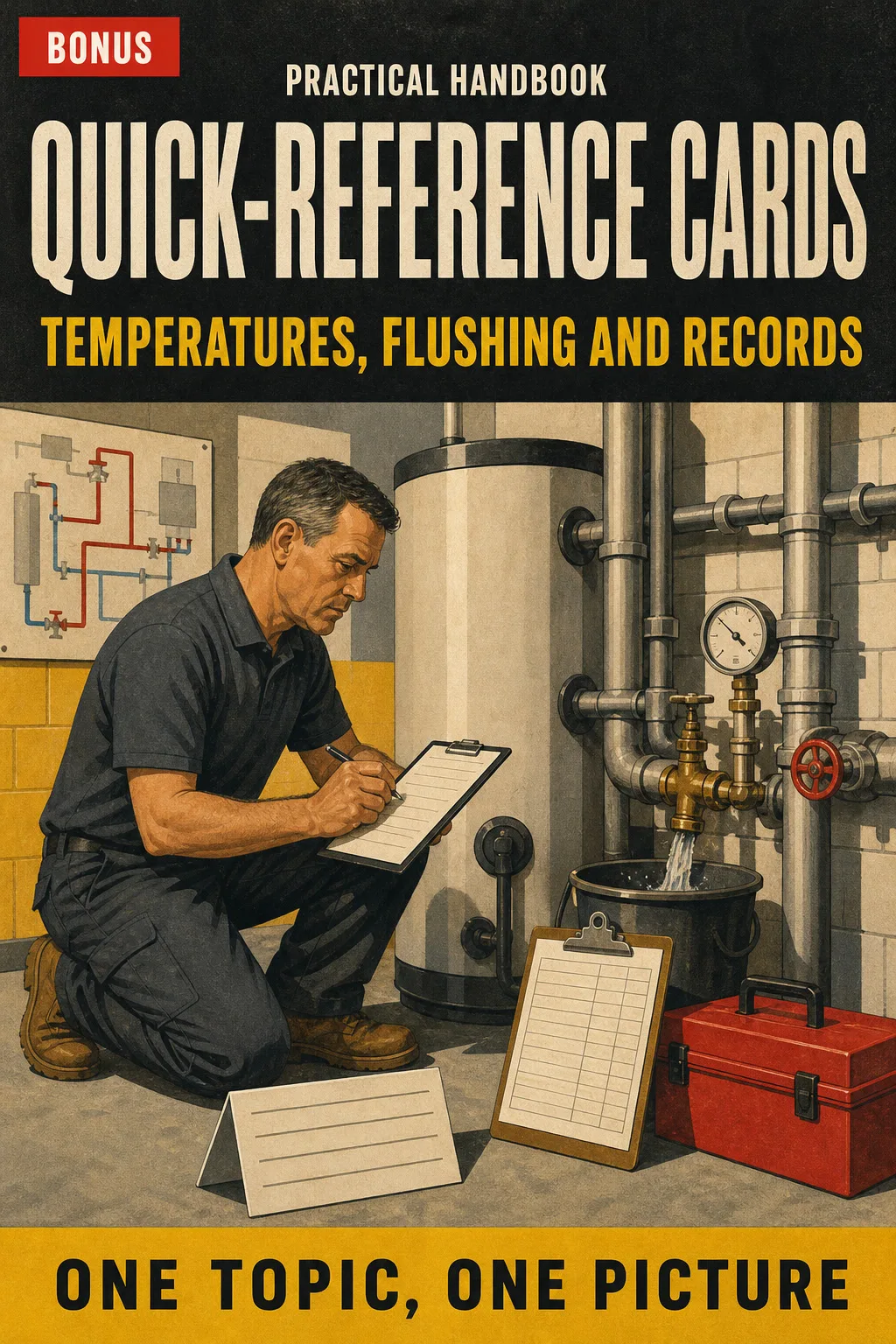
The numbers and steps you need on the day, on a few printable cards to keep by the tank, the cylinder or in the van.
📄 This is a digital PDF book sent to your email: nothing is printed or shipped.
PDF by email: We email you Legionella Risk Assessment Illustrated as a PDF, together with the two free books. It's a single payment: no installments, no extra charges.
You follow the 4 steps with your own property in front of you, and the worked example for 6 flats shows you what a finished assessment looks like.
You know which taps to test, how long to run them, what to write in the log and what to do when a reading is wrong.
You get the system drawn part by part, so you can show the customer exactly where the dead leg or the warm cold pipe is.
📄 This is a digital PDF book sent to your email: nothing is printed or shipped.
Try Legionella Risk Assessment Illustrated for 30 days, bonus books included.
We refund everything if the file won't open, if the book isn't what you see here, if you were charged twice or if the email doesn't arrive. Just email us.
You pay once. No subscriptions.
Yes. It's written for landlords, caretakers, facilities staff and plumbers. It starts from the whole system drawn on one page, so you don't need a plumbing background. If you're a plumber, you know the pipework already: what you get is the assessment, the control scheme and the records laid out in order, with drawings clear enough to show a customer.
It's written for UK systems: loft tanks, hot water cylinders, combis, feed and expansion tanks and TMVs, with temperatures in °C. It's checked against the HSE Approved Code of Practice L8 and HSG274 Part 2, read alongside the Health and Safety at Work etc. Act 1974 and COSHH 2002. Temperatures and intervals are marked so you can check them against the current version.
No. It's an independent illustrated reference book. It isn't published, approved or endorsed by the HSE or any other body.
No. It helps you understand your system and carry out and record the assessment, the scheme and the checks yourself, if you're the person responsible. Buying the book doesn't make you compliant on its own: what counts is the assessment you write and keep under review. It doesn't come with a certificate. For complex systems, or readings you can't put right, call a specialist; the book shows when. It isn't legal or medical advice.
It follows the guidance used in England, Scotland and Wales. Northern Ireland has its own regulator, so check its current guidance there. The practice drawings are written for this book, not taken from any course.
As a PDF by email, to the address you enter at checkout. The 2 bonus books come the same way.
No. It's a one-off payment, with no subscription.
Yes. It's a PDF you can print at home or at a print shop, including the quick-reference cards to keep by the tank or in the van. The book shows a temperature log and a flushing record filled in, step by step. If you want them as blank sheets ready to print, that's the Printable Logs and Templates Pack, offered as an extra at checkout.
You have 30 days. We refund everything if the file won't open, if the book isn't what you see on this page, if you were charged twice or if the email doesn't arrive: just email us.
No more rereading the guidance without it sticking.
Dead legs, tanks and sentinel taps: you see them drawn, and they make sense.
You get to the tank knowing where everything is.
Drawings make studying faster.
The book is right below.
One-time payment: US$ 27 · Guarantee: 30 days · PDF by email
YES, I WANT LEGIONELLA RISK ASSESSMENT ILLUSTRATED FOR US$ 27📄 This is a digital PDF book sent to your email: nothing is printed or shipped.